 Testimonials

Effective contamination control doesn’t begin with a procedure. It begins with understanding.
+ Book Online Now
A cleanroom is only as good as the people who understand how it works, why it works, and what happens when control begins to break down.

Working effectively in a pharmaceutical cleanroom requires far more than knowing the definitions of Grades A, B, C and D or being able to recite the principles of GMP. It requires an understanding of how people, facilities, HVAC, pressure regimes, cleaning, contamination control, monitoring and operational behaviours interact as one system.
Honeyman Training’s Pharmaceutical Cleanroom Principles in Practice course is designed to bridge the gap between cleanroom theory and the realities of pharmaceutical operations.
Whether you are a graduate developing your understanding of controlled environments or an experienced professional looking to challenge and strengthen your existing knowledge, this course will help you look at cleanrooms differently. Rather than considering individual systems in isolation, delegates are encouraged to understand the cleanroom as a dynamic contamination control system, where seemingly small decisions and behaviours can have significant consequences.
The course is relevant to professionals working across Quality Assurance, Engineering, Quality Control, Validation and Operations, encouraging the cross-functional understanding that is essential when investigating problems, assessing risk and maintaining effective contamination control.
Throughout the training, delegates will explore the practical principles behind cleanroom design and operation, including:
- cleanroom classifications and their purpose
- airflow, HVAC and pressure differentials
- personnel and material movement
- gowning and cleanroom behaviours
- cleaning and disinfection principles
- environmental and microbiological monitoring
- contamination sources and routes of transfer
- the interaction between engineering controls and operational practices
- recognising situations where cleanroom control may be compromised
Most importantly, the course encourages delegates to think critically rather than simply follow procedures.
Why does the cleanroom operate this way? What is the control actually protecting? What happens if that control fails? And how would you recognise the warning signs?
Delegates leave with a stronger practical understanding of the principles underpinning pharmaceutical cleanroom control and, crucially, the confidence to apply that thinking within their own roles.
Because effective contamination control doesn’t begin with a procedure. It begins with understanding.
Pharmaceutical Cleanrooms: Principles in Practice – Book delegate places
Related Reading – Technical Brief (PDF) – Cleanroom Airflow Visualisation
Testimonials
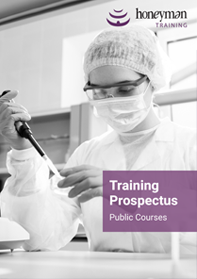
Training prospectus 2026
We have produced an overview of the course information available online, available here in a handy PDF Prospectus.
Our Customers
Our team has trained and works with the world's leading Pharmaceutical companies, including …






Latest News

6th October 2026
Effective contamination control doesn’t begin with a procedure. It begins with understanding.
Read more


28th May 2026
From Oxidisable Substances to TOC: Modernising the European Pharmacopoeia Monograph for Water for Injection <0169>
Read more

30th April 2026
The Use of Biological Indicators in Steam Sterilisation Qualification Studies
Read more


6th September 2024
Benefits of Microbiology Course for Non-Microbiologists in Pharmaceutical Manufacturing
Read more
